
Top 3 Winter Pests in Adelaide: Rodents, Termites and Possums – Here’s What You Need to Know
Winter in Adelaide means colder weather and that sends pests looking for warmth, shelter and food. At Home Shield Solutions, we’re seeing a significant increase in rodents, termites, and possums inside Adelaide homes this season.
Understanding why these pests become a problem in winter can help you take early action. If you’re noticing the signs, our expert team is ready to help with fast, effective pest control across Adelaide and we offer free quotes.
1. Rodent Control in Adelaide: Rats and Mice on the Rise
When temperatures drop, rats and mice start searching for a warm, dry place to nest and your home is the perfect target. Gaps under doors, roof tiles, or vents make easy entry points.
Why they’re common in winter:
- Less natural food and water outdoors
- Cold nights drive them indoors
- Indoor spaces offer warmth and shelter
Signs of rodent activity:
- Droppings in cupboards or pantry areas
- Chewed food packaging, wires or insulation
- Noises in the walls or ceiling at night
Home Shield Solutions offers expert rodent control in Adelaide, using safe and effective baiting, trapping and sealing solutions to stop infestations at the source.
2. Termite Treatment in Adelaide: Why Winter Is Still Risky
A common myth is that termites go dormant in winter — but in reality, they stay active year-round. While you might not see them flying, underground and internal colonies continue feeding on timber unnoticed.
Why they’re active in winter:
- Adelaide’s milder winters don’t freeze the soil
- Moisture buildup in winter creates ideal conditions
- Subfloors and wall cavities retain warmth
Warning signs of termites:
- Hollow-sounding wood
- Mud tubes or tunnels on walls and foundations
- Discarded termite wings
Our Adelaide termite treatment specialists use advanced thermal and moisture detection to find termites early, before they cause costly structural damage.
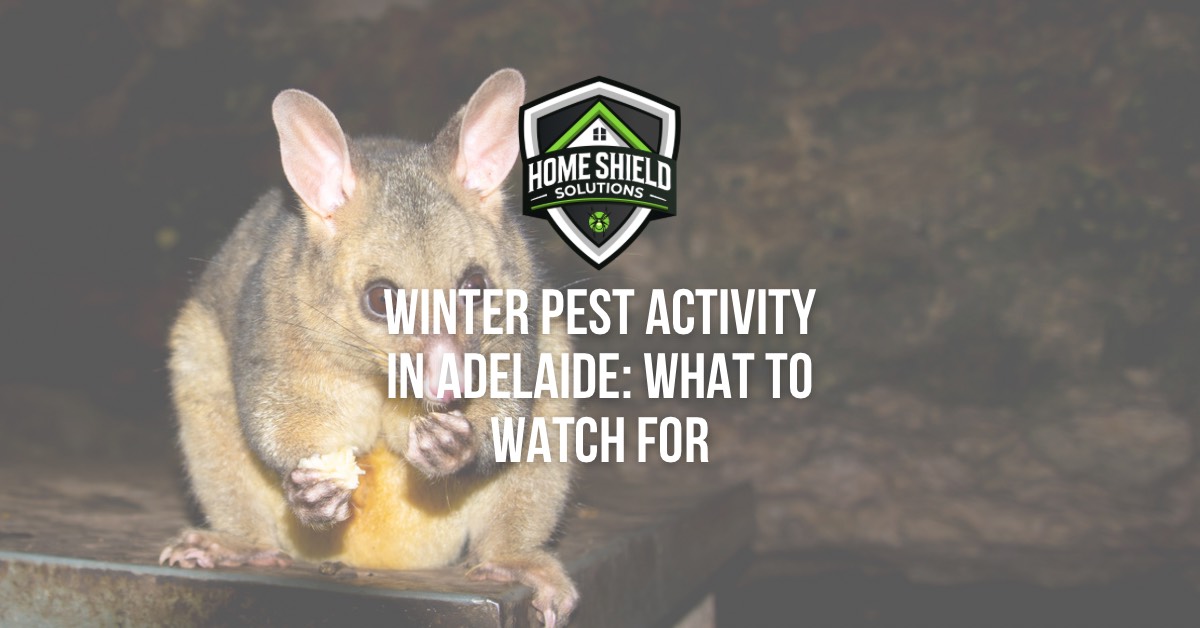
3. Possums in Adelaide: Why They’re Moving Into Roofs
Possums are a native and protected species, but in winter, their behaviour changes. As temperatures drop, they look for warmer places to nest, and your roof cavity offers shelter from the cold and rain.
Why possums are common in winter:
- Trees lose foliage, reducing their natural cover
- Roof cavities provide warmth and security
- Increased competition for food and shelter
Signs of possums in your roof:
- Heavy thumping or screeching at night
- Strong smell from droppings or urine
- Damaged roof tiles or insulation
Possums must be removed safely and legally. Our Adelaide possum removal service includes humane trapping and exclusion, plus sealing entry points to prevent return.
Why Choose Home Shield Solutions for Pest Control in Adelaide?
At Home Shield Solutions, we’re proud to be a trusted name in Adelaide pest control. We understand local pest behaviours especially how they change with the seasons and provide tailored solutions to keep your home pest free year round.
What sets us apart:
- Free, no obligation pest control quotes
- Fully licensed and insured technicians
- Fast, reliable local service
- Eco-friendly and family-safe treatments
- Guaranteed results on all services
Get a Free Pest Control Quote in Adelaide Today
Don’t let winter pests take over your home. Whether you’re dealing with rats, termites or possums, Home Shield Solutions offers expert pest control in Adelaide with free quotes and fast service.
Call us now at 0401 808 244
